The Vibe Check . What This Issue Feels Like

Playing Around With Nano Banana and Google Gemini 3 - Made By Jeneba
Letter From The Editor
Welcome back to High Tech Tea, your weekly-ish intelligence briefing where we slow down the noise of tech and help you understand what's actually tea in AI. 🫖
This week, I've been reflecting on my own AI journey this year, and wow, 2025 has been a ride.
If I did a Spotify Wrapped for my AI life, it would look something like this:
Top tools: Perplexity and Claude (especially Claude Code, we go together real bad)
Most used prompt: "Help me think or curate…………………."
Biggest learning: AI literacy isn't about keeping up with the industry — it's about keeping up with yourself
Minutes saved: Too many to count (but the mental bandwidth I got back? Priceless)
What would YOUR AI Wrapped look like? Hit reply and tell me — I'm genuinely curious.
Now, this week I want to talk about something that doesn't get enough shine: Black founders are building the AI future we actually need.
While Big Tech races to build bigger, faster, more powerful models, Black innovators are asking different questions: Who is this for? Who gets left out? What problems actually matter?
And honestly? That's the more interesting conversation.
From ethics-first AI platforms to beauty tech that finally understands textured hair to an emotional wellness app that lets you "crash out" safely, Black-led AI isn't just catching up to the industry. It's redefining what the industry should be building in the first place.
Plus: Microsoft just dropped the largest AI usage study ever (37.5 million conversations), and the findings are fascinating. Spoiler: people are using AI for their health and mental wellness way more than anyone expected.
That's the signal this week.
Let's get into it.
— Jeneba 👩🏾💻
Check out the new tools I built. Sign up early if you want to be a part of my AI community launching in February 2026. https://prompt-party-playground.lovable.app

Three years ago I started using Chat GPT to do my performance reviews. This time around, I’ve built an entire system to track your wins in real time, so nothing gets lost.”
Lesson: “The truth is: ‘doing amazing work’ means nothing if you don’t document it, analyse patterns, and show how you honoured your vision and values.”
The Climb Dashboard is soft life in software form.
No more:
✖️ digging through Slack for receipts
✖️ wishing you had tracked Q1 wins
✖️ reconstructing impact from memory
✖️ panicking at review time
Your brain was not designed to be your database.
So I built one for you.
Check out the app here, if you need it for your annual review this year.
Because we're not building followers. We're building AI citizens.
Welcome to the movement.
— Jeneba 👩🏾💻
🖤 Black Innovation Spotlight
This week, I'm highlighting Black-led AI ventures that deserve your attention — and your investment thesis.
Crash Out Diary — AI-Powered Emotional Wellness
Founder: Karima Williams
You know that moment when you're about to smash car windows, yell at your boss, or have a full-on Waiting to Exhale meltdown? That's a crash out. And 34-year-old innovator Karima Williams built an AI-powered platform to help you channel that energy safely.

Crash Out Diary lets you:
Offload — Pick a theme (work, life, love) and talk to an AI persona like the "Chaos Twin" or "Boy Best Friend"
Release — Choose to "crash out" with a tapping game where you break a phone, or "choose peace" with breathing exercises
Get rewarded — Fun memes celebrating that you "politely declined the chaos"
Williams was inspired to build this after using Claude to navigate her own emotions. "Traditional therapy feels inaccessible sometimes," she says. "With AI, you get immediate gratification of feeling heard and seen. It's non-judgmental."
Why it matters: This is AI meeting people where they are especially Black women who need a safe space to vent before they're ready for traditional therapy. The app normalizes crashing out without shame and creates a bridge to deeper healing work.
GuardianSync — Ethics-First AI
Founder: Amber Stewart
GuardianSync is framing AI not just as a technical frontier but as a social responsibility project. The company is building AI and digital-literacy programs for young adults — and funneling profits and resources back into communities.
Why it matters: This signals a growing movement among Black entrepreneurs not just to build AI tools, but to center ethics, equity, and community uplift in AI design and deployment. GuardianSync isn't asking "What can AI do?" — it's asking "What should AI do, and for whom?"
Myavana — AI Beauty Tech for Textured Hair
Founder: Candace Mitchell
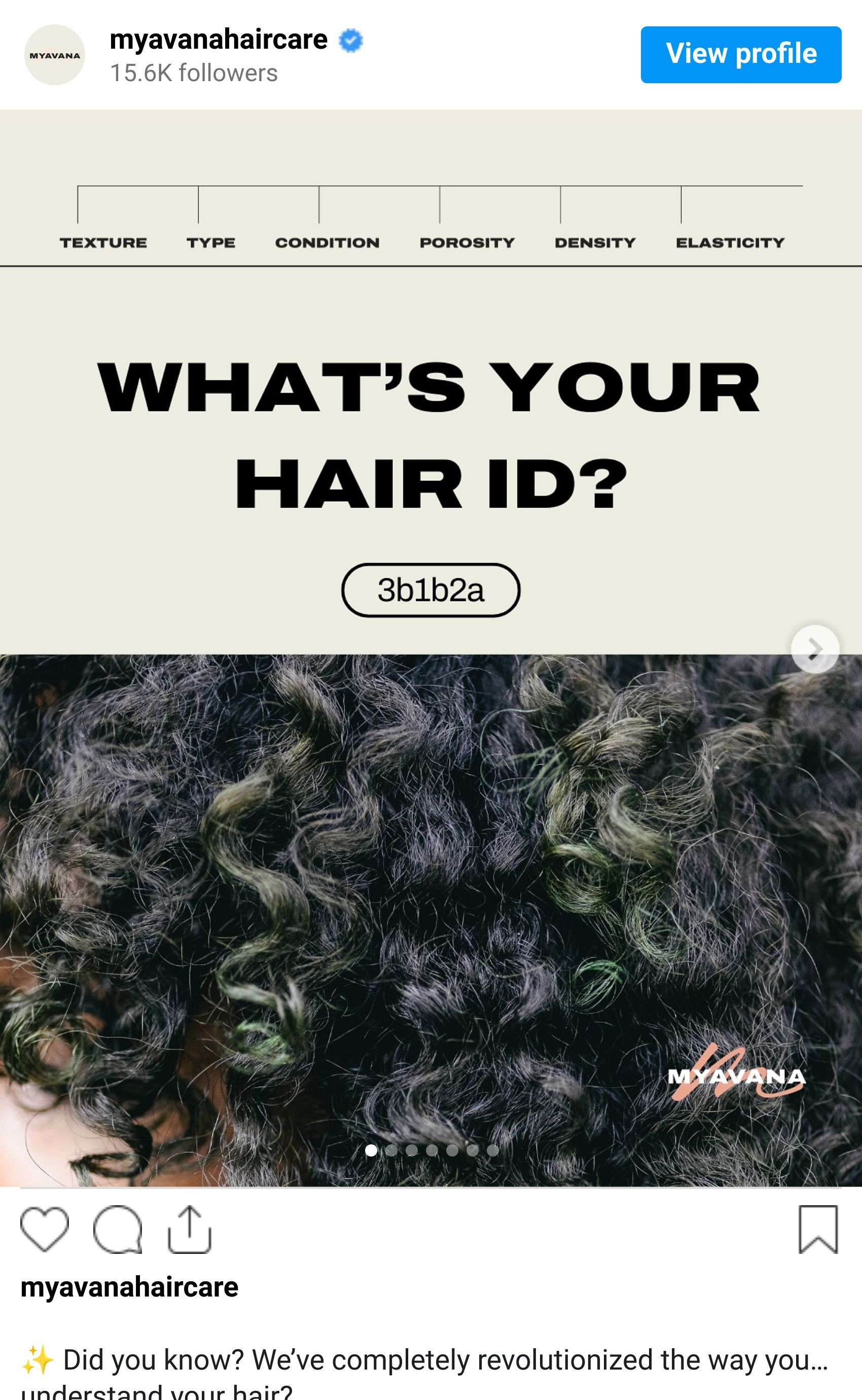
Myavana leverages AI to deliver personalized hair-care recommendations based on hair texture, health, and needs a gap long overlooked (aka ignored) by mainstream beauty tech.
Why it matters: This is what happens when Black founders build for Black consumers. Myavana isn't copying generic tech frameworks it's using data and personalization to serve communities that have been historically misrepresented or flat-out erased from the training data.
The mainstream beauty industry spent decades telling us our hair was "difficult." Myavana is building the AI that actually understands it.
Signvrse — AI + Accessibility for Deaf Communities in Africa
Founder: Elly Savatia (Nairobi, Kenya)
Signvrse built Terp 360: an AI-powered sign-language translation platform that uses 3D avatars to translate spoken or written text into sign language, supporting Kenyan Sign Language and expanding across other languages (I think this is so cool).
In 2025, Savatia won the Africa Prize for Engineering Innovation for this work.
Why it matters: Black innovators are harnessing AI not just for commercial gain, but to expand accessibility and inclusion in communities often overlooked by global tech. Signvrse is proof that AI can be a tool for liberation and accelerating if it's built by people who understand what liberation requires.
There's growing academic attention on embedding cultural awareness, contextual intelligence, and community accountability into AI systems. The newly proposed Contextual and Cultural Intelligence (CCI) framework argues for AI architectures that respect local cultural norms, particularly in African contexts ,rather than applying Western-centric defaults globally.
Why it matters: One-size-fits-all global models are giving way to regional, culturally nuanced systems. This creates space for consultants, strategists, and thought leaders who can bridge cultural intelligence with AI fluency. For Black innovators, this is our chance to do what we do best.
Notice what these founders have in common:
They're not just building with AI. They're building different AI systems designed with cultural awareness, contextual intelligence, and community accountability baked in from the start.
Black-led startups aren't limited to one industry: the wave encompasses fintech, beauty, wellness, edtech, accessibility, community tech. Black innovation is diversifying, intersecting domains, and refusing to be pigeon-holed.
This is the future. And Black innovation is leading it.
AWS + Black Entrepreneurs, Big Tech Takes Notice
Amazon and AWS are creating new pathways for Black entrepreneurs to build with generative AI. Dr. Nashlie Sephus, principal AI/ML evangelist for AWS Responsible AI, put it best:
"Generative AI gives Black professionals the same sophisticated tools that major enterprises use, but without requiring massive infrastructure. It's a chance to shift from being consumers of technology to being creators and owners of new businesses, new platforms, and new narratives."
AWS is offering up to $1 million in credits through their Generative AI Accelerator, plus the AWS Impact Accelerator specifically for Black, women, Latino, and LGBTQIA+ founders, providing cash, credits, training, mentoring, and technical guidance.
Why it matters: The barriers to building AI companies are collapsing. A startup founder in Jackson or Detroit can now build tools that previously required a full engineering staff. Small doesn't have to mean limited anymore. There are no limits. The only limit is you own imagination.
As Dr. Sephus says: "This is your moment. Don't wait for permission to innovate. The technology is here, the resources are here, and the opportunities are here. With AI, Black professionals can move from being underrepresented to being undeniable."
Executive TL;DR — What You Need To Know This Week
Here the tea on what’s moving the AI world right now:
BREAKING: GPT-5.2 Just Dropped
OpenAI launched GPT-5.2 this week in a whole panic with their "Code Red" response to Google Gemini 3’s release. It’ s the AI Wars for sure. The model comes in three flavors: Instant (fast responses), Thinking (complex reasoning), and Pro (maximum accuracy). OpenAI claims it performs at or above human expert level on professional tasks spanning 44 occupations and scored 100% on AIME 2025 math benchmarks. Heavy ChatGPT users report saving 10+ hours per week. Available now for paid plans and API developers.
I haven’t messed around with it yet, but 5.1 was not impressive and didn’t do much for.
Microsoft's 37.5 Million Conversation Study — The Findings Are Wild
Microsoft just published the industry's largest AI usage study, analyzing 37.5 million Copilot conversations. The headline finding nobody expected:
Health and fitness is the #1 topic on mobile, every hour, every day, all year.
On desktop, it's work and technical questions during business hours. But on mobile? People are using AI as a private health advisor, wellness tracker, and therapist and emotional confidant.
Other patterns:
2 AM: Philosophy and existential questions spike
Work hours: Travel planning (lol)
Weekdays: Programming
Weekends: Gaming
February: Relationships and personal growth (Valentine's Day effect)
The study confirms what I've been saying: AI isn't just a productivity tool anymore. It's becoming a life companion. The question is whether we're building the literacy to use it wisely.
You can read the whole report here, if you want https://microsoft.ai/wp-content/uploads/2025/12/What_people_do_with_Copilot-8.pdf
DeepSeek V3.2 Drops — Open-Source Hits GPT-5 Level
Chinese AI lab DeepSeek released V3.2 and V3.2-Speciale, open-source models rivaling the best proprietary systems. V3.2-Speciale won gold medals in IMO, IOI, and placed second at ICPC World Finals 2025. The models feature DeepSeek Sparse Attention — a breakthrough that cuts inference costs by 70% while maintaining quality.
The kicker? It's all open-source under the MIT License. Anyone can use it, modify it, deploy it.
I’m loving the DeepSeek model, and I just started using it again after not using it for about six months. It’s fast, it’s free, it’s accurate.
The first prompt I ever put into was about trying to understand Project 2025 and having them analyze it for me since it is a Chinese-made model, I thought it would be less biased.
Tools Radar — What's New This Week

Google Labs Updates:
Mixboard — AI-powered concepting board now supports Nano Banana Pro to help you explore ideas and generate presentations
Doppl — Fashion app that creates a digital model of yourself from photos so you can virtually try on any outfit. Now features a TikTok-style shoppable discovery feed with AI-generated outfit videos. Everything shown is real and purchasable. Try it Love this! Now I can really visualize my fits in real life and not just in my head. Talk about throwing a fit!
ChatGPT + Instacart Partnership: ChatGPT now lets users shop for groceries through Instacart without leaving the chat. Browse products, build your cart, check out — all in the conversation. Agentic shopping is here. Are yall going to be buying groceries in Chat?
Hinge + AI for Dating: Hinge rolled out "Convo Starters" — AI-powered conversation prompts when you like someone's profile. 72% of users are more likely to engage when likes include a message. Commenting with a like doubles your chances of landing a date. Gen Z is skeptical (AI feels too artificial for something so personal), but Match Group is investing $30M into AI across its platforms.
Claude Code in Slack — Why This Is a Bigger Deal Than It Sounds:
Anthropic just brought Claude Code to Slack, and here's why you should care even if you're not a developer:
What it does: When you tag @Claude in a Slack thread, Claude can now read the entire conversation context bug reports, feature requests, and engineering discussions — and turn that into actual code. It identifies the right repository, writes the fix, posts progress updates in the thread, and opens a pull request. All without anyone leaving Slack.
Slack is my favorite work communication tool, and it works way better than Teams, which I despise, so I hype for this upgrade!
Why it matters for everyone:
This isn't just about coding. It's about AI meeting you where your work already happens.
Think about it: most of the critical context around any project exists in chat. The conversations where problems get identified. The threads where solutions get brainstormed. The messages where decisions get made.
Claude Code in Slack represents a shift from "go to a separate tool to use AI" to "AI is embedded in your workflow." That's the future for every profession, not just developers.
The real-world use cases:
A product manager reports a bug in Slack → tags Claude → Claude investigates, proposes a fix, and opens a pull request
Developers brainstorm a feature tweak in a thread → tag Claude → feature gets built
Someone on the Marketing team asks, "Can we add this small thing?" → Claude handles it without anyone context-switching
The numbers are staggering:
Rakuten reportedly reduced software development timelines from 24 days to 5 days (79% reduction)
Anthropic's internal survey found engineers using Claude in 60% of their work achieved a 50% productivity boost
Claude Code has already hit $1 billion in revenue, six months after launch
The tension worth noting:
Anthropic's internal research surfaced something interesting: Claude has become the first stop for questions that once went to colleagues. One engineer said it "reduced my dependence on my team by 80%." Some appreciate the reduced social friction. Others miss the older way of working: "I like working with people, and it is sad that I need them less now."
AI is moving from separate tools into the platforms where we already collaborate. This changes how teams communicate, how work gets done, and what skills matter. Whether you're a developer or not, understanding this shift is essential.

Google AI Glasses Announced
Google AI Glasses (Coming 2026): Google announced plans for two types of AI-powered glasses:
Audio-only glasses — Interact with Gemini through built-in speakers, microphones, and cameras
In-lens display glasses — Real-time data like translation and navigation directly in your vision
Partnerships with Samsung, Gentle Monster, and Warby Parker. $150M commitment. This is Google's play to compete with Meta's Ray-Ban AI line.
Oboe — AI Learning Platform ($16M from a16z): Oboe transforms any subject into a structured learning experience with custom visuals that break down complex concepts into digestible lessons. If you're serious about AI literacy, check it out.
ClickUp 4.0 with Brain AI: ClickUp pulled projects, chats, docs, automations, and AI assistant into one "converged" workspace. Ask @Brain to answer questions, schedule work, and spin up agents instead of bouncing between tools. Free to get started.
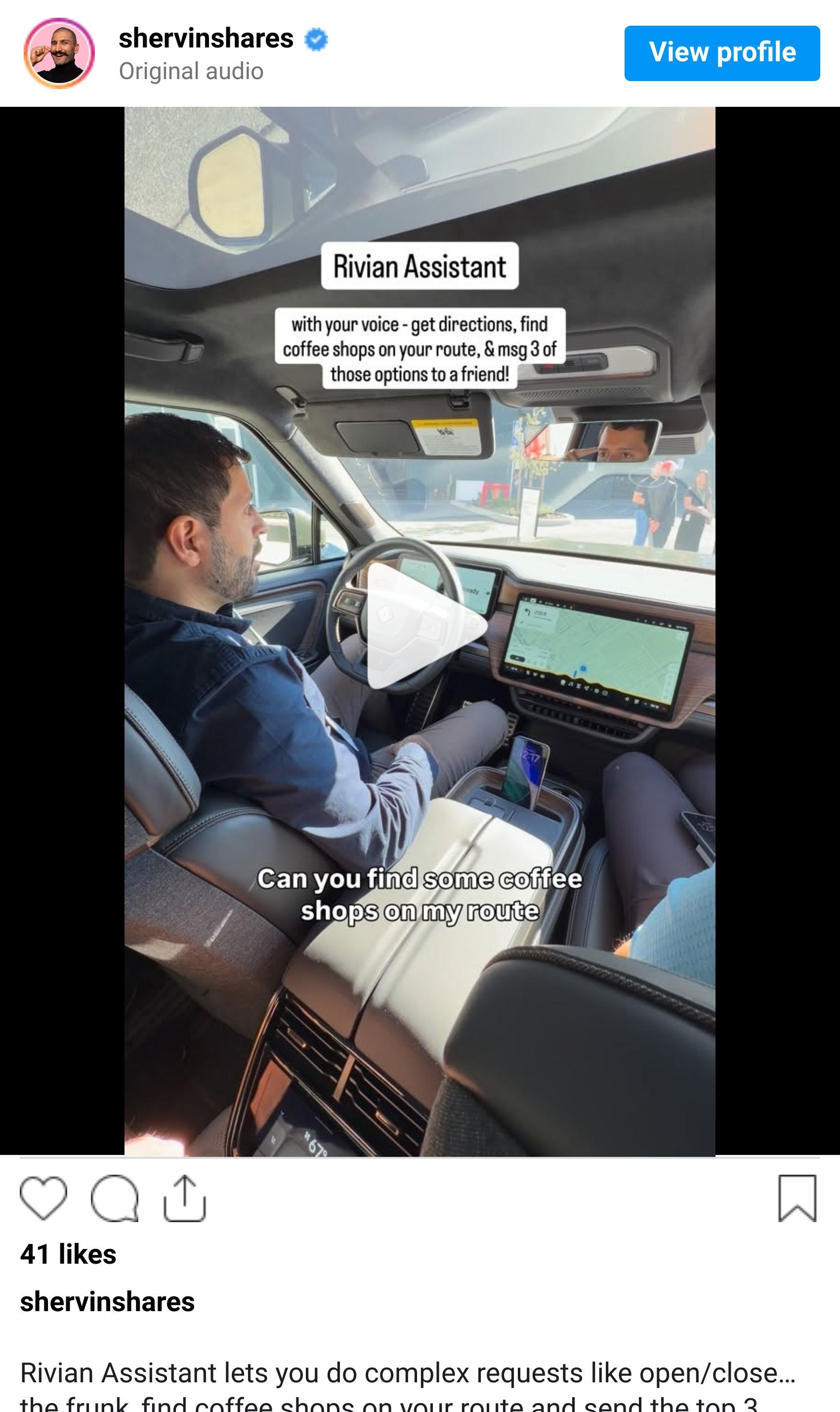
Rivian AI Assistant (Coming 2026): Rivian will ship a built-in AI assistant to every existing EV in early 2026, using their new Rivian Unified Intelligence platform plus Gemini and Vertex AI. Drivers will be able to control car functions and connect apps like Google Calendar via an agentic framework. AI is coming to your car.
I’m obsessed with Rivian and this will be my next car! Having Gemini in your car is next level
🧘🏾♀️ AI + Mental Health & Wellness
Here's the tea nobody's talking about enough:
People are using AI for mental health and wellness way more than anyone expected.
The Microsoft Copilot study confirmed it: health and fitness is the #1 topic on mobile devices — beating out work, tech, entertainment, everything. And the usage patterns are revealing:
Late-night hours show spikes in philosophy and intimate advice-seeking
Users increasingly turn to AI for guidance rather than mere fact retrieval
People are treating AI as a "confidant," something they're too scared to ask their father or friends
Why This Matters?
1. AI Is Filling a Gap
Traditional therapy feels inaccessible and too expensive for a lot of people. The cost. The waitlists. The vulnerability of finding the right match. The stigma.
AI offers something different: immediate, non-judgmental, always-available support. No scheduling. No insurance. No fear of being judged.
For people who need a bridge to professional support or who just need to process something at 2 AM AI is becoming that first stop.
2. Black Mental Health Specifically
Let's be real: mental health resources have historically not been built with us in mind. Finding a Black therapist who understands our cultural context can be hard. The stigma in our communities around seeking help is real.
AI tools like Crash Out Diary (featured above) are being built by Black founders who understand these barriers. They're creating culturally aware entry points that meet people where they are without shame, without judgment.
That matters.
3. The Data Is Clear
Microsoft's study analyzed 37.5 million conversations. Health was the #1 topic on mobile every hour, every day, all year. People are asking about symptoms, seeking advice, processing emotions, and looking for guidance.
And this isn't just about physical health. The late-night spikes in philosophy and personal advice suggest people are using AI for existential questions, relationship issues, and emotional processing.
As one researcher put it: "Somewhere tonight, a teenager in a dark room will bypass the coding assistant, ignore the writing tools, and ask the machine a question they're too scared to ask their father. Not because the technology was designed for this purpose. Because this is what humans do when given something that listens."
The Question I Want To Ask You
Do you use AI for mental health or to improve your own wellness?
Hit reply and tell me! I genuinely want to know how our community is engaging with this. Are you using it for emotional processing? Journaling prompts? Therapy between sessions? Health questions?
I'm curious because this is a space where AI literacy meets life and I want to make sure we're covering what actually matters to you.
Apps and Tools to Watch in This Space
Crash Out Diary — Karima Williams' emotional venting platform (featured above). AI-powered, culturally aware, and built for people who need to release before they crash out in real life.
Claude — Many people are using it for emotional processing and self-reflection. The "Claude as thought partner" use case is growing.
ChatGPT — OpenAI is rolling out new mental health safety measures with GPT-5.2, acknowledging that people are using it for support.
The Reality Check, Use Wisely and Process Accordingly
Here's what you need to know:
AI can be helpful for emotional support, but chatbots weren't designed for therapy.
They've been known to:
Get things wrong
Tell you only what you want to hear
Reinforce delusional behavior
In rare but serious cases, encourage self-harm
These conversations also lack the legal confidentiality of consultations with a doctor or therapist. Your data is being used. Your vulnerable moments are being processed by a system.
The right frame:
Use AI as a bridge to professional support, not a replacement. Use it for processing, not diagnosis. Use it for reflection, not as your only source of validation.
As Crash Out Diary founder Karima Williams puts it: "The more AI available, it doesn't mean that people need humans less. It just means humans become more of a premium."
The literacy takeaway: AI wellness tools can be powerful for people at certain points in their journey. But discernment matters. Know when to use AI for processing and when to seek human connection. Your mental health is too important for anything less than intentional, informed choices.
Resources For The Week — Go From AI Ambition to Implementation
One of my goals for this newsletter is to help our community go from AI ambition to implementation. Not just understanding AI, but actually using it to build, create, and lead.
Here are some resources to help you level up:
HubSpot's Free ChatGPT Productivity Guide:
100+ ready-to-use prompts for immediate implementation
15+ real-world applications across various sectors
21 best practices to 10x your efficiency with AI
In-depth sections on email, content creation, customer support, and data
IBM's Agentic AI Playbook: Three challenges and approaches to boost the impact of your agentic AI:
Finding your AI problem
Creating a clear AI plan
Integrating AI with the tools you use every day
Google's 3 Popular Gemini Prompts: Google AI posted their most popular prompts in honor of Gemini's 3-week anniversary. Check them out.
Pretty Minds On AI
💬 Soft Signal — Building With Conscience
This week's Black innovation spotlight reminded me of something important:
The most meaningful AI isn't the most powerful. It's the most intentional.
GuardianSync, Myavana, Signvrse, Crash Out Diary — these companies aren't trying to win benchmark races. They're trying to solve real problems for real communities. They're building with conscience.
And that's the model worth studying.
As you develop your AI literacy, don't just ask "What can this tool do?" Ask:
Who was this built for?
Whose data trained it?
Whose needs does it serve — and whose does it ignore?
The most sophisticated AI user isn't the one who prompts the fastest. It's the one who thinks the deepest about what they're building and why.
Your intentionality is your superpower.
💬 Prompt of the Week — Soft Life Engineering: Year-End Reflection
Since we're wrapping up 2025, I wanted to share the prompt I used to sum up my year and check my progress. This is "Soft Life Engineering", using AI to reflect with intention.
Paste this into your model of choice:
=== YEAR-END REFLECTION ===

I want to reflect on my year and assess my progress, lessons learned, challenges, and opportinities that I might not see. Help me think through:

1. **Wins & Accomplishments** — What did I achieve this year? What am I proud of? What did I learn?

2. **Challenges & Growth** — What was hard? What didn't go as planned? What did those challenges teach me?

3. **Relationships & Connection** — How did my relationships evolve? Who showed up for me? Who did I show up for?

4. **Health & Wellness** — How did I take care of myself? Where did I neglect my wellbeing? What do I want to prioritize?

5. **Goals Assessment** — What goals did I set at the beginning of the year? Which did I hit? Which did I miss? Why?

6. **Patterns & Insights** — Based on all of this, what patterns do you notice? What themes emerged?

7. **2026 Intentions** — Based on this reflection, what do I want to carry forward? What do I want to release? What intentions should I set for the new year?

Ask me clarifying questions to help me go deeper. Challenge my thinking where needed. Help me see what I might be missing.
Why this matters:
This prompt builds:
Self-awareness — clarity on what actually happened vs. what you think happened
Pattern recognition — spotting themes across different areas of life
Intentional planning — setting goals rooted in real reflection, not wishful thinking
Cognitive partnership — using AI as a thought partner for deep personal work
Try it. You might be surprised what surfaces.
Hit reply and let me know what insights come up for you! Let me know if this was helpful
Coming Soon: My Favorite AI Resources
In upcoming issues, I'll be sharing:
Fave AI Courses — What's actually worth your time (and what's overrated)
Fave AI Books — The reads that shaped my thinking
Fave AI Articles — The pieces I keep coming back to
Best of AI Tools 2025 — My honest review of what worked this year
Join the AI Citizen Movement
My mission is simple: help our community go from AI ambition to implementation.
Not just understanding AI, but actually using it to build, create, and lead.
If this issue hit different for you, forward it to one person who needs to see Black innovation getting the spotlight it deserves.
What I want to hear from you:
What would YOUR AI Spotify Wrapped look like? (Hit reply!)
Do you use AI for mental health or wellness? How?
What topics do you want me to cover in future issues?
Next week: "The Four Levels of AI Literacy — From Awareness to Agency."
Let's build the future with intention.
— Jeneba